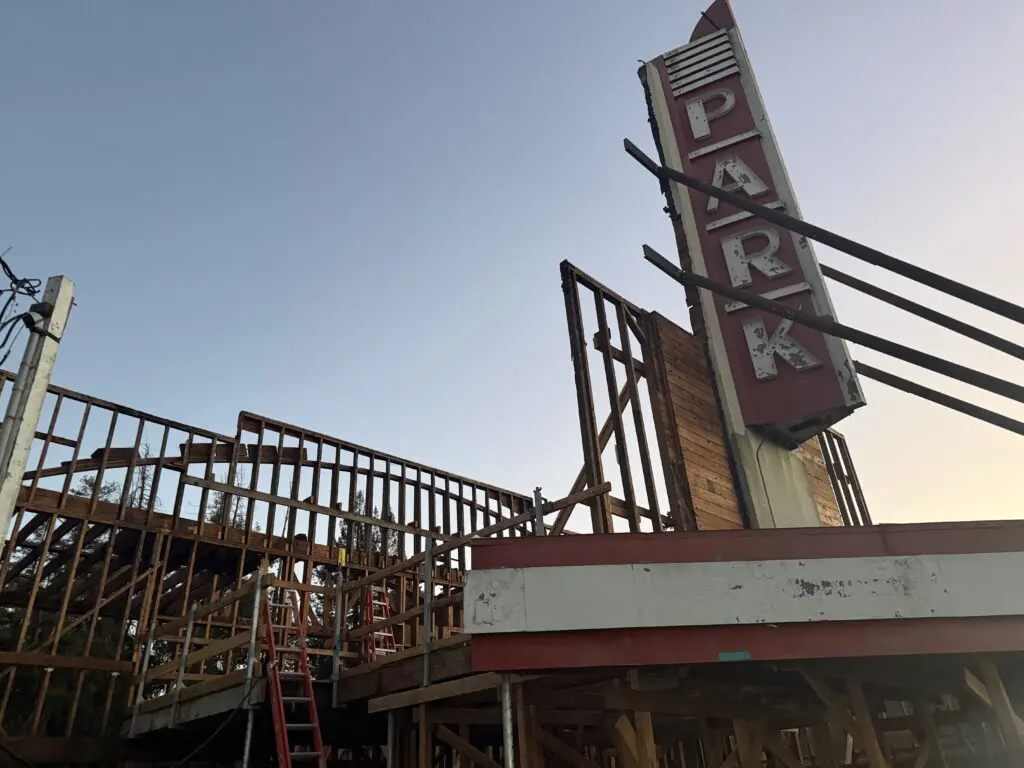
Hollywood Isn’t “Dead,” it’s Under Reconstruction.

Hollywood Isn’t “Dead,” it’s Under Reconstruction.
HOORAY FOR HOLLYWOOD!
Hollywood isn’t dying. It’s being rebuilt.
Nothing is impervious to change—not even an industry that has spent decades clinging to the past by its fingernails.
In the wake of COVID, the streaming revolution, back-to-back WGA and SAG-AFTRA strikes, and the explosive arrival of artificial intelligence, Hollywood is once again being forced to reinvent itself.
Over the past year, I’ve watched the traditional Hollywood playbook begin to unravel—and something extraordinary emerge in its place.
Iron Lung shattered expectations through self-distribution, earning roughly 16 times its production budget in worldwide theatrical grosses.
Crowdfunded projects like Daniel and the Fiery Furnace demonstrated that audiences can help finance the stories they want to see—and turn those stories into theatrical events.
And Dreams of Violets, a fully AI-generated narrative feature, premiered at the Tribeca Festival, challenging long-held assumptions about what it takes to bring a film to the screen.
The message couldn’t be clearer: The gates are opening. And the gatekeepers are losing their grip.
For too long, filmmakers have been told they need permission. Permission from agents, studios, financiers, distributors, and an endless parade of decision-makers before their stories can reach an audience.
But the landscape is changing. Filmmakers are finding new ways to finance, produce, distribute, and connect directly with audiences—often without the traditional Hollywood machinery.
Does that mean every independent film will succeed? Of course not. But it does mean the road to success is no longer limited to a single, heavily guarded entrance.
And here’s the most important part:
STORY IS STILL KING.
Technology will change. Business models will collapse and rebuild. Distribution platforms will come and go. But our appetite for extraordinary storytelling isn’t going anywhere.
Great writers will find ways to tell their stories—with or without agents, with or without A-list actors, with or without a pulse.
Okay, perhaps a pulse is still helpful.
The point is, there have never been more ways for filmmakers to put their work into the world. The tools are changing, the opportunities are expanding, and the definition of success is being rewritten before our eyes.
Hollywood isn’t dead. It’s under reconstruction.
And perhaps, when the dust settles, we’ll discover an industry that’s more accessible, more inventive, more courageous, and more willing to take a chance on an extraordinary story.
Because the future of filmmaking doesn’t belong exclusively to those who control the gates.
It belongs to those with the courage to tell great stories—and the determination to get them seen.
Hooray for Hollywood. The next act is just beginning.